Kotter's 8 step change model that actually works
John Kotter's 8-step change model helped NetApp achieve a 44% revenue increase. Learn what each of the 8 steps requires and how to make organizational change stick.

Eliyahu Goldratt developed Critical Chain Project Management (CCPM) to address common project delays caused by procrastination, multitasking, and poor buffer management. Texas Instruments, Harris Semiconductor, and Lucent Technologies report that similar projects take half the time or less with CCPM, a finding the Project Management Institute also confirms.
Regulatory change management is a repeatable process. Secureframe found non-compliance costs roughly three times more than compliance. A four-step approach handles new regulations without chaos.
Jeff Hiatt created the ADKAR model at Prosci after studying over 1000 organizations going through major changes. It maps five sequential psychological stages that every person must complete for organizational change to succeed.
William Bridges' transition model explains why organizational change fails. The real problem is not the change itself but the three-stage internal transition people must go through.
An executive summary should be roughly 5 to 10 percent of the main business plan, distilling key points so decision-makers can act fast. At accelerators like 500 Startups, investors often decide from the summary alone.
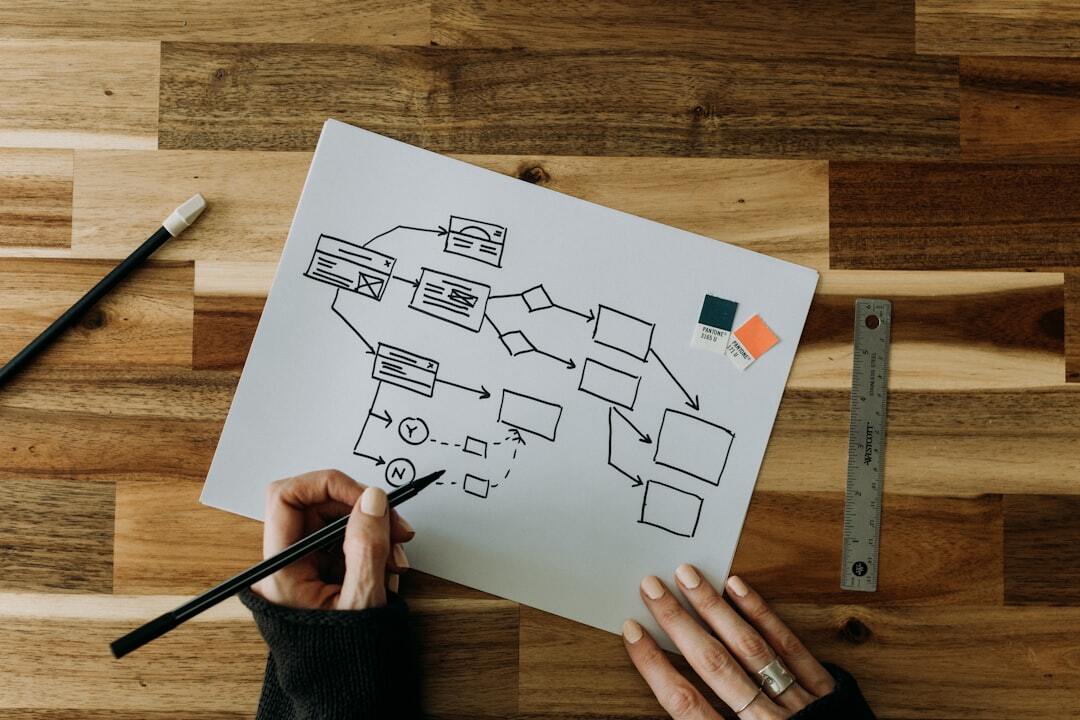
A process flowchart, first developed by Frank Gilbreth in 1921, diagrams each step and decision point in a business process. This guide covers four practical use cases, three creation methods from pen and paper to BPM software, and real examples from employee onboarding, document approval, and incident response.
An end to end process captures every step and handoff from trigger to final outcome. Few organizations redesign workflows end to end before deploying technology, and those that do tend to see stronger financial returns. Most teams underestimate how far their processes really stretch.
Functional, divisional, matrix, flat and hybrid - each org structure with a chart, real-company example and the workflow trade-off it forces. Henri Fayol started this.
The critical path method, developed at DuPont in 1957, identifies which tasks determine your project timeline. Learn the PERT formula, build a network diagram and finish on time.
Managing a remote team requires a very different strategy than managing on-site employees. Forbes data shows remote workers are more productive and engaged, but success depends on three factors: hiring self-starters with strong written communication skills, choosing the right tools for each business function, and building a deliberate remote culture.
Most SOPs gather dust because they are boring walls of text. One services company using Tallyfy went from 65 employees to 15 after SOPs revealed massive task duplication across four execution levels.
A project management office can boost project performance, or quietly become bureaucratic overhead. Process discipline matters more than headcount.
Process owners hold end-to-end accountability for how work flows. APQC research shows 82 percent of organizations appoint process owners, yet without one, improvement efforts drift and AI automation has no solid workflow to follow.
PRINCE2 is a structured project management method originally developed by the UK government, built on seven principles, practices, and processes. Here is how it works and why it matters more than ever.
Operations manuals capture company know-how from procedures to emergency responses. Tallyfy identifies five essential components and explains why digital processes beat printed booklets.
Pick a BPM tool with drag-and-drop design, AI-native integration that bypasses legacy middleware, and pricing that scales without demanding six-figure investments.
W. Edwards Deming published his 14 points in 1982 as a philosophy for quality management that most organizations still get wrong despite decades of evidence.
Kaizen is a Japanese methodology, popularized by Masaaki Imai, for continuous improvement through small, consistent changes rather than dramatic overhauls. The Plan-Do-Check-Act cycle and structured Kaizen events make improvements stick when paired with genuine engagement across the entire organization.
PMBOK is the global project management standard from PMI, recognized by ANSI and ISO. The 8th edition brings back about 40 processes, adds an AI appendix, and shows why process definition still matters more than tools.
The project management process has five phases that turn ambiguous goals into finished work. Poor project management wastes an enormous amount of money every year, and AI only scales that chaos faster.
Root cause analysis, using methods from Kaoru Ishikawa and Sakichi Toyoda, digs past surface symptoms to find the one process failure behind multiple problems. One hospital traced 17 failure points back to a single process gap.
Gemba walks send managers to where work happens instead of relying on reports. Taiichi Ohno built this practice at Toyota because direct observation reveals process problems no dashboard ever will.
Business process integration connects BPM software to other systems so workflows run end-to-end without manual handoffs. Most organizations run dozens of apps, and Tallyfy provides no-code connections to bridge the gaps.